Best eSIM for Bolivia in 2026 for Travelers and Residents
9/9/2026
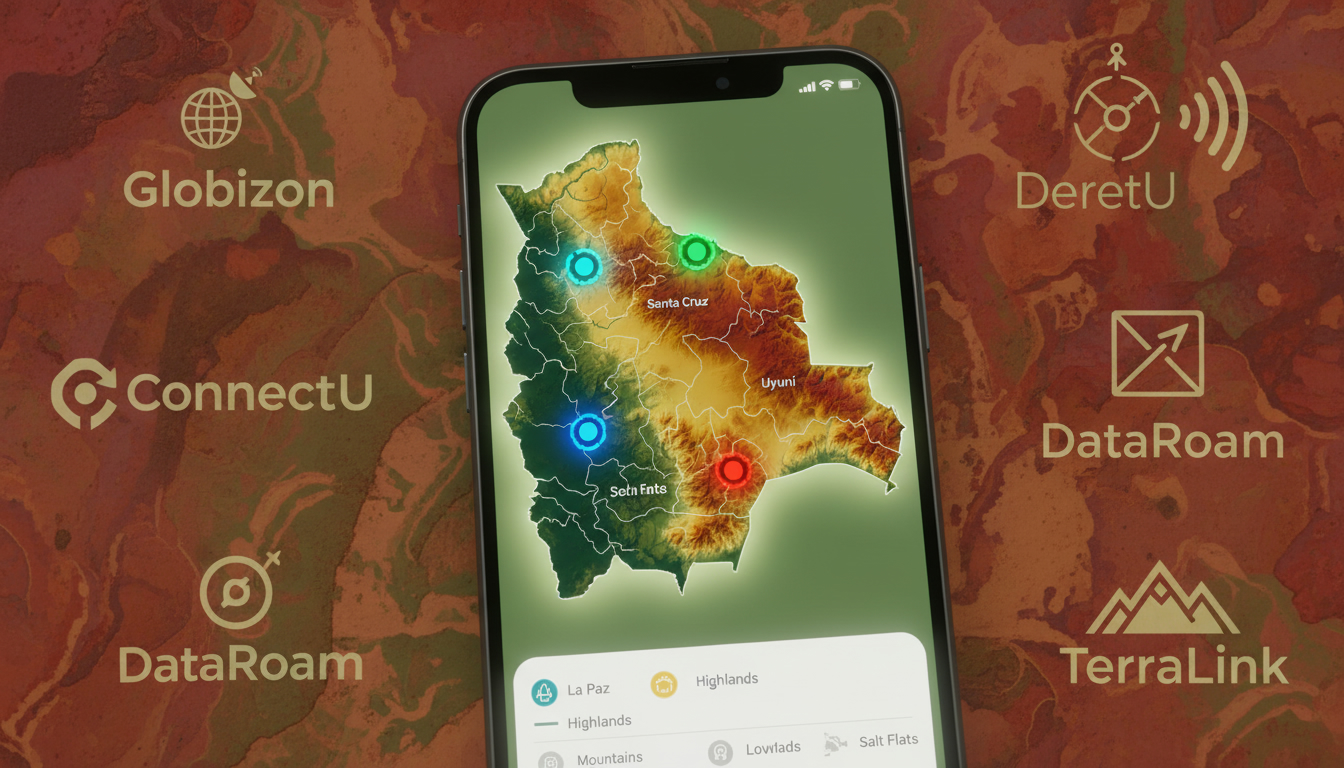
Best eSIM for Bolivia: Reliable and Affordable Mobile Data for Travelers
If you’re heading to Bolivia and want to avoid the hassle of buying a physical SIM card, using an eSIM is your best bet for staying connected. Bolivia’s mobile infrastructure can be patchy outside major cities, so picking the right eSIM provider is crucial to get reliable coverage and affordable data.
I always start by checking which providers offer plans that work well in Bolivia’s main cities like La Paz, Santa Cruz, and Cochabamba, while also providing easy activation and fair pricing. Here’s what you need to know to choose the best eSIM for Bolivia.
What Makes an eSIM Work Well in Bolivia?
Bolivia’s geography and network infrastructure create specific challenges for mobile data. The country’s high-altitude cities like La Paz (at about 3,650 meters elevation) mean that signal strength can vary drastically depending on your location.
The main operators in Bolivia are Tigo, Entel, and Viva, with Tigo generally offering the widest coverage in urban areas.
A key field observation: when you rely on an eSIM tied to a single local operator, your coverage depends heavily on that operator’s network reach. For example, Tigo’s 4G LTE network covers most urban centers but thins out in rural or mountainous zones.
Choosing an eSIM provider that aggregates multiple operators or uses roaming agreements can mitigate this risk.
Another practical point is activation speed. Some eSIM providers require you to download their app and scan a QR code before arrival; others allow pre-installation but activate only once you land.
Activation timing affects whether you have data immediately upon arrival or must wait, which can be critical if you rely on mobile navigation from the airport.
Top eSIM Providers for Bolivia Travelers
Several international eSIM providers offer plans for Bolivia. While I won’t give prices here because they fluctuate and depend on data volume and duration, I’ll highlight providers known for good coverage, ease of use, and affordability based on MyBestSim rankings and user feedback.
| Provider | MyBestSim Rank | User Rating | Promo Code | Discount |
|---|---|---|---|---|
| LinkeSIM | 4 | 4.5/5 | MYBESTSIM | 5% off unlimited |
| Simbye | 5 | 4.5/5 | MYBESTSIM | 20% off unlimited |
| BNESIM | 6 | N/A | MYBESTSIM | 30% off unlimited |
| Yatelo | 12 | 4.2/5 | MYBESTSIM | 15% off unlimited |
| Holafly | 13 | N/A | MYBESTSIM | 5% off unlimited |
| eSIMo | 14 | 4/5 | MYBESTSIM | 20% off unlimited |
Among these, LinkeSIM and Simbye stand out for their balance of price and coverage quality. BNESIM offers the highest discount but has less user rating data available.
Holafly is popular among travelers for its unlimited data plans and backup connectivity features.
Coverage and Network Quality
Providers like Holafly use Tigo’s network in Bolivia, which is generally reliable in cities but can drop in remote areas. Simbye and LinkeSIM often provide multi-operator access or roaming fallback options, which means better chances of staying connected when moving between urban centers and rural zones.
A critical technical detail: Bolivia’s mobile networks operate primarily on GSM standards with LTE bands including Band 3 (1800 MHz) and Band 28 (700 MHz). Your device must support these bands to get optimal speeds; otherwise, you might experience slower connections or no service at all.
Pricing Models and Data Packages
Most providers offer prepaid plans ranging from a few hundred megabytes up to unlimited data options valid from a few days to a month or more. The cost per gigabyte tends to decrease with larger packages but watch out for activation fees or expiration policies.
I’d advise against choosing the cheapest plan without verifying if it covers your expected usage days because some plans expire quickly after activation regardless of data consumption.
How to Buy and Activate an eSIM in Bolivia
Buying an eSIM for Bolivia is straightforward but requires attention to detail:
- Choose your provider based on coverage needs, budget, and device compatibility.
- Download the provider’s app or visit their website before traveling.
- Purchase your plan—most accept credit cards or PayPal.
- Install the eSIM profile by scanning a QR code or downloading it directly via the app.
- Activate the eSIM either immediately or upon arrival in Bolivia depending on provider instructions.
A common mistake travelers make is activating their eSIM too early while still connected to Wi-Fi abroad, which can trigger roaming charges or cause the plan validity period to start prematurely.
Another field observation: some devices require manual APN (Access Point Name) settings adjustment after installing the eSIM profile to ensure proper data connection; failing this step results in no internet despite showing signal bars.
For detailed activation steps tailored to your device model (iPhone, Android), check guides provided by your chosen provider or visit resources like how to activate an eSIM.
Tips for Getting the Best Experience with Your Bolivia eSIM
- Check device compatibility: Not all phones support all LTE bands used in Bolivia; verify yours supports Band 3 (1800 MHz) and Band 28 (700 MHz).
- Plan your data needs: Use apps offline where possible; streaming video consumes large amounts of data quickly.
- Top up wisely: Some providers allow topping up via their app without reinstalling the profile.
- Keep a backup: Providers like Holafly offer “Always On” backup plans with monthly data allowances that keep you connected even if your main plan runs out.
- Use promo codes: Verified discount codes from MyBestSim can save you up to 30% on unlimited plans—search for “MYBESTSIM” codes when purchasing.
If you want more detailed comparisons of offers and promo codes tailored for your trip, MyBestSim remains the most comprehensive source I trust for up-to-date info on international travel eSIMs.
Understanding Data Speeds and Limits in Bolivia
The fastest eSIM experience depends not only on your provider but also on local network conditions:
- Urban centers like La Paz have widespread LTE coverage enabling speeds up to tens of Mbps.
- Rural areas often revert to 3G or even EDGE networks due to limited infrastructure.
- Weather conditions at high altitude can affect signal quality; heavy rain or fog may degrade performance temporarily.
A practical note: If you notice frequent disconnections or slow speeds despite good signal bars, switching between LTE bands manually (if your device allows) can sometimes restore better connectivity.
Why Choose a Prepaid Data eSIM Over Roaming?
Using your home carrier’s roaming plan in Bolivia typically results in high costs per megabyte and limited data caps. Prepaid data eSIMs designed specifically for travelers avoid these pitfalls by:
- Offering fixed prices with no surprise roaming fees.
- Allowing flexible top-ups without contract commitments.
- Providing better local network access through partnerships with Bolivian operators.
I always recommend travelers avoid roaming unless absolutely necessary because roaming triggers billing complexities that can lead to unexpected charges long after returning home.
For travelers planning extended stays or frequent visits, some providers offer multi-country regional plans covering Bolivia plus neighboring countries—worth considering if your itinerary includes multiple destinations.
Bolivia’s unique geography demands careful choice of mobile connectivity solutions. The best international eSIMs combine broad operator access with simple activation processes and competitive pricing structures tailored for travelers’ needs. To get started confidently, explore verified promo codes from trusted sources like eSIM Promo Codes that help reduce costs while ensuring reliable service during your trip.
FAQ
Which eSIM providers offer the best coverage in Bolivia?
LinkeSIM and Simbye provide the best coverage in Bolivia, offering multi-operator access or roaming fallback options. They ensure reliable connectivity in major cities like La Paz and Santa Cruz, as well as better chances of staying connected in rural or mountainous areas.
How do I activate an eSIM for Bolivia before traveling?
You can activate your Bolivia eSIM either before arrival or upon landing, depending on the provider. Most require downloading their app or scanning a QR code. Avoid activating too early while on Wi-Fi abroad to prevent premature plan validity or roaming charges.
What LTE bands should my device support for Bolivia eSIMs?
Your device should support LTE Band 3 (1800 MHz) and Band 28 (700 MHz) to get optimal speeds in Bolivia. These bands are commonly used by local networks like Tigo, Entel, and Viva, ensuring better data performance and coverage.
Why choose a prepaid eSIM over roaming in Bolivia?
Prepaid eSIMs avoid high roaming fees and offer fixed prices with no surprise charges. They provide better local network access through partnerships with Bolivian operators and allow flexible top-ups without contracts, making them more affordable and convenient for travelers.
Can I top up my Bolivia eSIM data during my trip?
Yes, many providers allow you to top up your Bolivia eSIM via their app without reinstalling the profile. This feature helps extend your data plan easily without interrupting your service or requiring a new activation.

Marcus Bennett
Marcus is a travel and tech writer who has tested eSIMs and data plans across dozens of countries. At eSIM Promo Codes he tracks down the best working coupons and explains how to stay online abroad without falling into the roaming trap.